

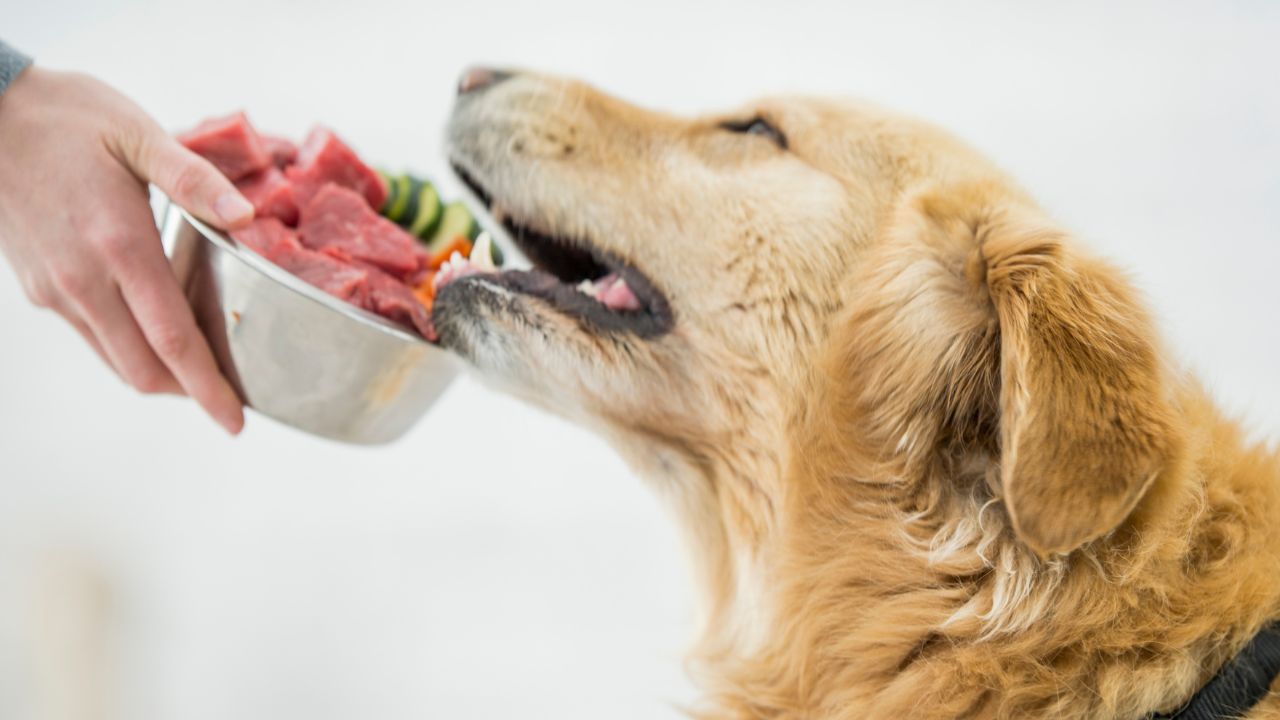
The world of pet nutrition has been divided into two camps - those who believe in feeding fresh, whole, raw foods to their pets and those who argue that pets should be fed processed foods such as kibble or canned food.
This disagreement often stems from our understanding (or misunderstanding) of a pet's 'design' and what it indicates about their dietary needs. The design of your pets, particularly cats and dogs, plays a critical role in ensuring their optimal health and longevity. So, is your pet naturally designed to thrive on a raw food diet, or are they better suited for processed foods? Let's find out...
Raw Food Diet for Pets: Challenging Popular Beliefs
A common belief among many veterinarians is that cats and dogs are designed to eat only heavily processed foods like kibble. According to this thinking, feeding your pets anything other than cooked and ultra-processed food can be harmful. However, this perspective overlooks several critical factors that should be considered when evaluating the best diet for your pets.
The Role of Evolution in the Raw Food Diet for Pets
Firstly, it's essential to consider the evolutionary aspect of our pets' dietary needs. Cats and dogs have evolved over thousands of years, primarily consuming raw foods in their natural habitats. Their digestive systems are designed to handle raw meat, bones, and even some plant materials. Ignoring this evolutionary background and feeding them a diet mainly consisting of processed foods can be detrimental to their health.
The Unregulated Nature of Commercial Pet Food
Another alarming issue is the lack of regulation in the commercial pet food industry. Many pet food brands are not subjected to rigorous quality control, which means the ingredients listed on the packaging may not be a true representation of what's inside. This lack of transparency can be a significant concern for pet owners who want to provide the best for their animals.
Commercial pet food companies are quick to amplify any health issues associated with raw diets in the media. They seize these opportunities to cast doubt on the safety and efficacy of feeding pets a raw food diet. However, what often goes unnoticed is that these same commercial pet food brands experience significantly more product recalls for issues like contamination or harmful ingredients. These recalls are usually downplayed or buried by the media, creating an imbalanced narrative that can mislead pet owners.
The Rise of Chronic Diseases with Commercial Pet Foods
Since the introduction of commercial pet foods, there has been a noticeable increase in chronic diseases among pets. Conditions like obesity, diabetes, and various digestive issues have skyrocketed. Many of the 170+ experts that Pet Summits have interviewed, believe that this rise in chronic diseases is directly linked to the processed foods that pets consume, which are often high in carbohydrates and low in essential nutrients.
So, when we consider the design and evolutionary dietary needs of our pets, we must ask: What are they really designed to eat? The answer often points away from processed foods and towards a more natural, raw food diet that aligns with their biological needs. Let's explore that in more detail...
Understanding 'Design' in the Context of Raw Food Diet for Pets
To comprehend the meaning of 'design' in this context, consider the design of vehicles. Just as cars are designed for specific roles, sizes, and internal mechanics, so are our pets. Dogs and cats have different breeds, each designed for specific roles. For instance, Chihuahuas or Boston Terriers are petite companion animals.
Conversely, large working breeds like Great Danes, German Shepherds, or Rottweilers were designed for particular tasks. This comparison helps us understand the design of our pets more clearly.
The Anatomy of Cats and Dogs: Designed for a Raw Food Diet
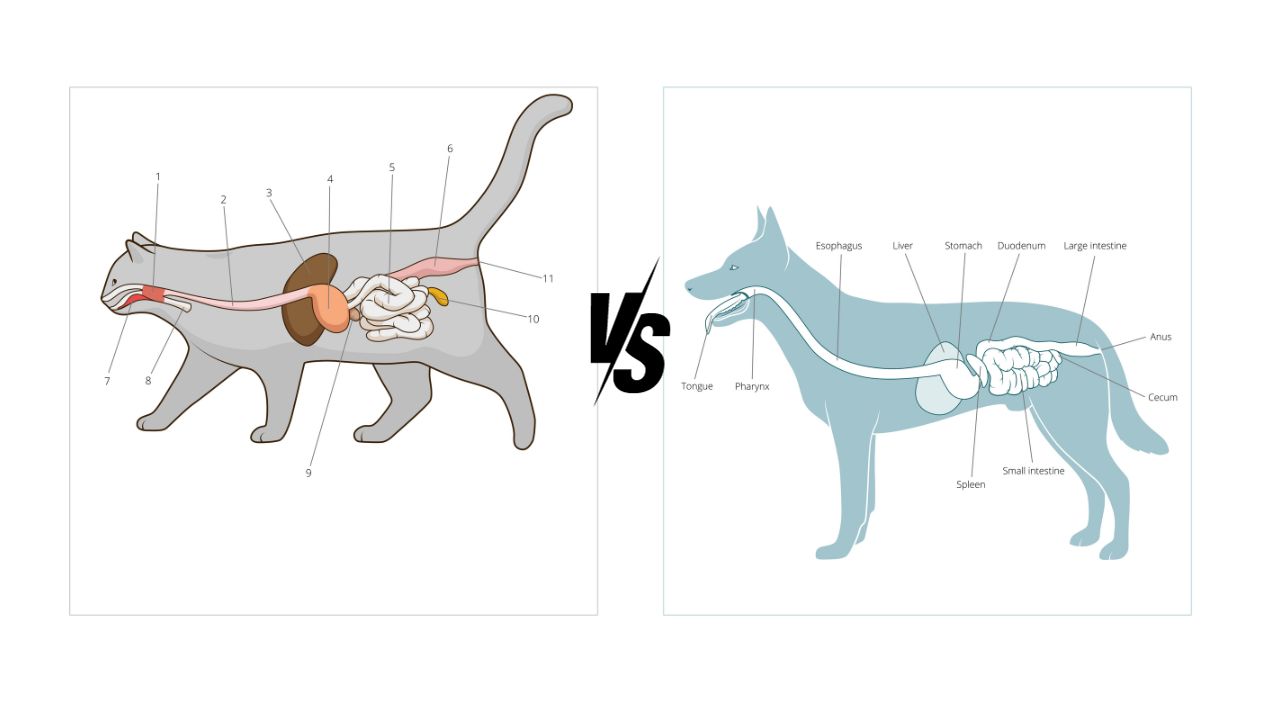
Beyond the breed-specific roles, the anatomical design of cats and dogs reveals a lot about their dietary needs. Their sharp, pointed teeth are not designed for grinding plant material but for tearing flesh.
Their digestive systems are short and acidic, optimized for digesting meat quickly and efficiently. These anatomical features point to a natural design that is geared towards a diet rich in raw meat, bones, and organs.
Evolutionary Eating Habits: What Would They Do in the Wild?
In the wild, you won't find a dog cooking its food or a cat growing its own grains. Their natural behavior involves hunting smaller animals, tearing them apart, and eating them raw. This is what they have been doing for thousands of years before domestication. And this is what they still do when left to roam around in the wild. There is a great Netflix series that provides an entire episode about wild dogs and how they hunt, called Predators.
Their bodies are designed to consume and derive nutrients from raw animal parts, including the meat, bones, and organs.
The Incongruity of Processed Foods with Natural Design
Given their natural design and evolutionary history, feeding pets processed foods like kibble is incongruous with their biological needs. Imagine a sports car being fueled with low-grade oil; it's not going to perform well.
Similarly, when we feed our pets processed foods that are high in carbohydrates and synthetic additives but low in natural nutrients, we are not honoring their true design.
Feeding in Harmony with Pet's Design
As vehicles require specific fuel and maintenance to function optimally, our pets also require a diet that matches their specific design. For instance, a vehicle running on diesel wouldn't perform well with gasoline - likewise, our pets need the right 'fuel' as per their design.
Cats and dogs aren't designed to use carbohydrates as their primary energy source.
The Need for Designer-Specified Parts
Just like how vehicles require the replacement of worn-out parts, cats and dogs also need their worn-out body parts to be replenished. However, these replacement parts - in the form of nutrients from food - must be according to the designer's specifications.
Poor quality nutrients can lead to health issues and a shortened lifespan, just as the wrong parts can cause a vehicle to break down or blow up.
Who designed our pets?
While it might seem that breeders are the 'designers' of our pets, this is not entirely correct. Breeders modify an already complex design, mainly focusing on size and shape.
The real design template for our pets has existed for a long time, created by a different entity, definitely not the breeder. Understanding this design can be the key to providing the right nutrition for our pets. Let's look at that in more depth...
The Evolutionary Design of Our Dogs and Cats: A Case for Raw Food Diet for Pets
It is a widely accepted truth that our dogs and cats are products of a lengthy evolutionary process. Understanding this process can provide us with vital insights into their nutritional needs. Specifically, it helps us understand why a raw food diet for pets aligns so well with their biological makeup. But how does this evolutionary design link to the types of food they should consume, not just the nutrients they need?
Revisiting Ancient Wolves: The Ancestors of Our Pets and Their Raw Food Diet
When discussing the dietary needs of our dogs, it's essential to go back to their roots—specifically, to the ancient wolves from which they descended. Contrary to popular belief, our dogs are not direct descendants of the wolves we know today. Instead, they share a common ancestor with modern wolves, an ancient wolf species that lived thousands of years ago.
Over time, both modern wolves and our domestic dogs have evolved, but they've done so on separate paths. This divergence has led to changes in what scientists refer to as their "nutritional genomes." These are the sets of genetic instructions that dictate what kind of diet is most beneficial for an animal's health and well-being. For our dogs, this nutritional genome has been shaped over thousands of years to favor a diet that is rich in raw foods, much like the diet their ancient wolf ancestors would have consumed.
Understanding this evolutionary history is crucial when considering the best dietary choices for our pets today. It provides a compelling argument for the raw food diet for pets, which aims to mimic the natural, unprocessed diet that dogs and their wolf ancestors have been eating for millennia. This diet is rich in proteins, fats, and other nutrients that are naturally found in raw meat, bones, and organs—foods that align closely with the nutritional genome of dogs.
Food: The Essential Driver of Evolution
Our focus should be on food rather than merely nutrients. Foods consumed by our dogs and cats throughout their evolutionary journey have shaped their nutritional genome. The foods consumed during this extensive evolutionary process, particularly raw foods, have sculpted this part of a pet's DNA.
These are the foods that evolution used to design a dog's or cat's body, and they are what our pets require today for optimal health and longevity.
The Impact of Food Environments on the Raw Food Diet for Pets
Each food environment, based on its duration and proximity to the present, influences the food choices we must make for our pets today. For example, the "raw" food feature began when life began and is deeply embedded in the canine and feline genome.
This means our pets are evolutionarily designed to consume a raw food diet, a fact that may be difficult for some to grasp.
Cooking and Its Evolutionary Role: Why Raw Food Diet for Pets Makes Sense
Cooking, in the grand scheme of evolutionary history, is a relatively new phenomenon. While it has been a transformative development for human diets, the same cannot be said for our pets. The reason lies in the timeline; cooking has not been around long enough to significantly alter the nutritional genome of dogs and cats.
In human history, cooking unlocked new sources of nutrients and made certain foods more digestible. However, the digestive systems of our pets are not designed to extract nutrients from cooked foods in the same way that human digestive systems are. Their shorter gastrointestinal tracts and higher stomach acidity are optimized for a diet rich in raw foods, particularly meats. This is why a Raw Food Diet for Pets aligns so well with their biological makeup.
Moreover, the commercial pet food industry, which often relies on cooking and processing, is relatively unregulated. This means that many commercial pet foods may not provide the balanced nutrition that pets need, leading to long-term health issues. In fact, there has been a noticeable increase in chronic diseases among pets since the introduction of commercial pet foods. This trend further underscores the need for a diet that is more in tune with what pets would naturally consume.
Why is this largely unknown? Well guess who also funds veterinary school. We'll leave it to you to join the dots...
Feeding Your Animals: The Power Of Raw Food Diet For Pets
The Modern Pet Food Era: A Health Disaster
The modern pet food era, which began in the mid-19th century, has been a disaster for pet health. This era is characterized by the widespread use of synthetic, low-quality, grain-based pet foods. These processed foods are far removed from what our pets would naturally eat, leading to a rise in degenerative diseases like diabetes, obesity, and cancer.
Evolution takes time, and our pets simply haven't had enough time to adapt to these unnatural diets.
The Ideal Dog Diet: Raw and Natural
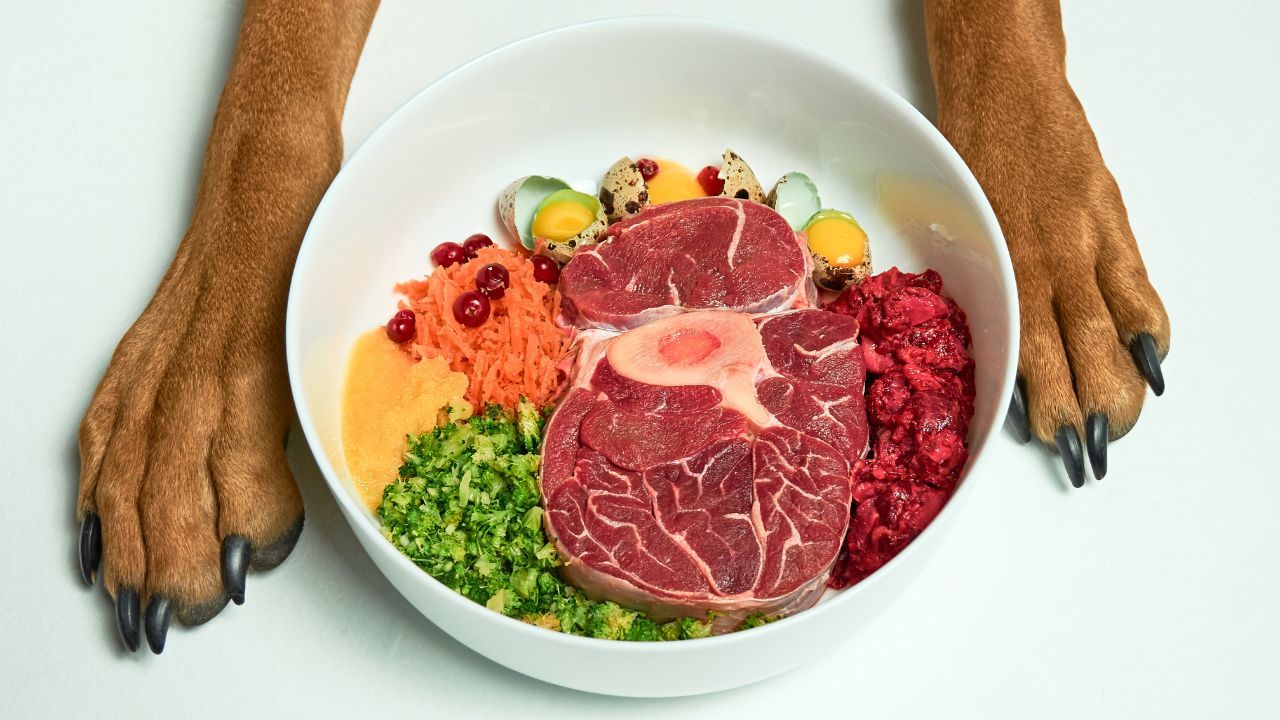
Dogs are designed by evolution to thrive on a diet rich in skin, bones, flesh, blood, cartilage, and internal organs. They are not exclusively carnivorous but are omnivorous carnivores by design. This means they are naturally inclined towards a raw food diet for pets, which includes a variety of animal parts.
They have also evolved as scavengers, consuming decaying, buried, and fermenting food, which provides them with essential nutrients and probiotics.
The Power of Bones in the Raw Food Diet For Pets
Bones are not just a source of calcium for dogs; they are a complex nutritional resource. They provide essential minerals and marrow, and they also play a role in dental health. Unlike cats, which are obligate carnivores and have a more limited diet, dogs are designed to consume bones.
Dogs: The Ultimate Dietary Opportunists
Dogs have a versatile and adaptable nature, allowing them to survive on a range of diets. However, survival is not the same as thriving. Processed pet foods may keep them alive but will not provide the nutrients needed for optimal health and longevity. The raw food diet aligns with their evolutionary design, offering the best chance for a healthy, long life.
The Feline Dietary Blueprint: Obligate Carnivory
Cats have a more straightforward dietary design than dogs. They are obligate carnivores, designed to consume other animals. For about 30 million years, this dietary principle has remained largely unchanged. Feeding them grains and processed foods leads to chronic health issues like diabetes, obesity, and inflammatory bowel disease. The raw food diet, focusing on raw meaty bones and internal organs, aligns with their natural dietary needs.
Adopting a Raw Food Mindset: It's Not an Alternative, It's The Way
As pet owners, we need to shift our mindset about pet nutrition. The raw food diet for pets is not an alternative; it's the natural way our pets were designed to eat. Processed foods are the real alternative, a recent and unfortunate development that can't replace the millions of years of dietary evolution.
Simple Steps Checklist for Feeding Your Cat or Dog a Raw Diet
- Consult Your Vet: Before making any changes to your pet's diet, consult your veterinarian, especially if your pet has health issues.
- Do Your Research: Learn about the nutritional needs of your specific pet's breed and age. Make sure you understand the basics of a balanced raw food diet for pets.
- Source Quality Ingredients: Look for high-quality, human-grade raw meat, bones, and organs. Make sure they are free from additives and preservatives.
- Start Slow: Introduce raw food gradually, mixing it with your pet's current food to help them adjust.
- Balance the Diet: Ensure the diet includes a mix of muscle meat, organ meat, and edible bones for dogs; for cats, focus more on organ meat and less on bones.
- Add Supplements: Include essential fatty acids and other supplements like taurine for cats, as advised by your vet.
- Portion Control: Measure portions based on your pet's weight, age, and activity level.
- Safe Storage: Store raw food in airtight containers in the freezer. Thaw in the refrigerator before feeding. Avoid bacterial contamination.
- Cleanliness is Key: Always wash your hands, as well as any bowls or utensils used, to prevent bacterial contamination.
- Monitor Your Pet: Keep an eye on your pet's weight, energy levels, and overall health. Make adjustments to the diet as needed.
- Regular Vet Check-ups: Schedule regular vet visits to monitor your pet's health and make sure the diet is meeting their nutritional needs.
By following these simple steps, you can transition your pet to a Raw Food Diet for Pets safely and effectively.