

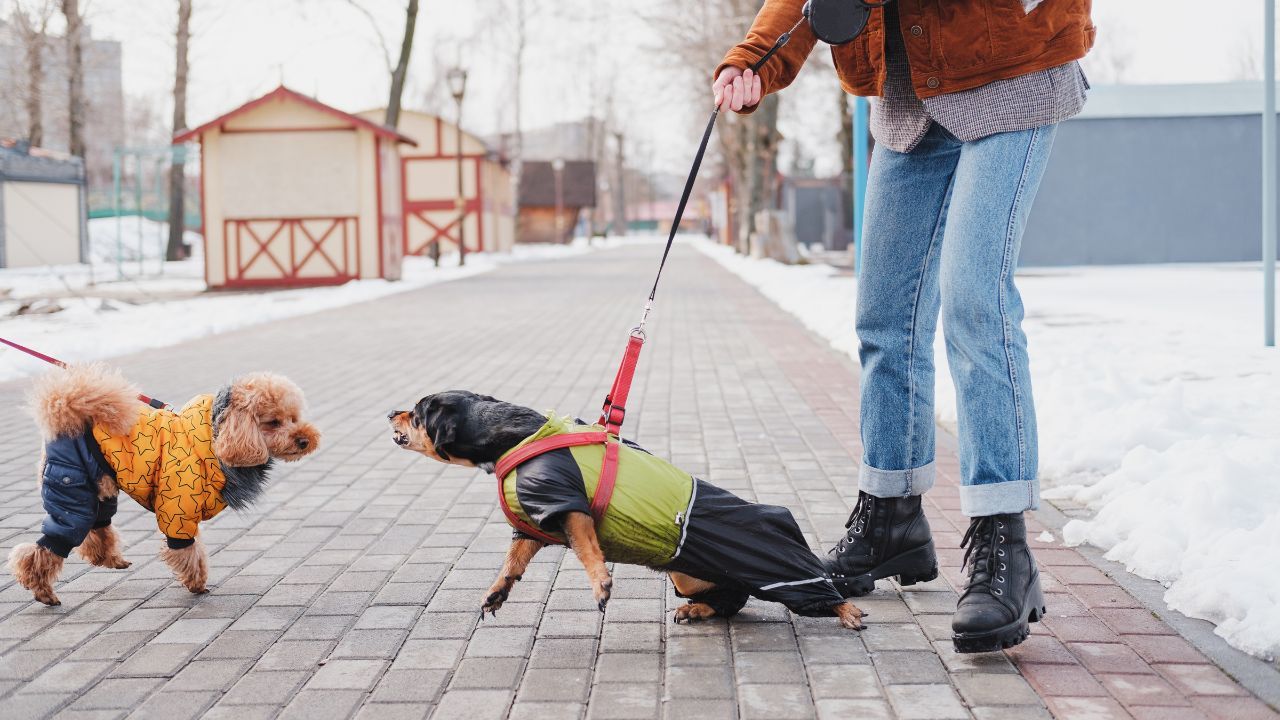
Ever been in the park, leash in hand, and your usually obedient pup suddenly morphs into a lunging, barking tornado at the sight of another dog? If so, you’ve witnessed ‘dog to dog reactivity’ firsthand. But why does this happen?
You see your dog as your lovable pet who fetches balls and naps on your lap. However when he’s around other dogs…let’s just say it can be less than ideal.
In this article, I’ll explore what causes these canine tantrums! We’ll learn how adult dogs play an important role model for their younger counterparts; discover the power of praise over punishment; explore ways to shift perception about reactive dogs; understand stimulus-blocking techniques and more importantly – realize the impact of rewarding good behavior!
Are you ready to take a walk on this path and solve dog to dog reactivity?
Understanding Dog to Dog Reactivity
Dog to dog reactivity is a behavior issue that’s quite common, especially in young and energetic puppies. It refers to an overreaction to other dogs, often manifesting as excessive barking, lunging or aggression.
This isn’t necessarily due to hostility. Rather, it could be because the reactive dog is scared or overly excited. They might not have learned proper social cues yet or they’re responding to a perceived threat.
Reactive dogs aren’t bad; they’re just misunderstood and need help managing their emotions around other canines. As someone who has worked with countless pups over the years – from calm Labradors, all the way up to spirited Terriers – I’ve seen firsthand how understanding this type of dog to dog reactivity can drastically improve your relationship with your pet.
The Science Behind Reactivity
In many ways, our canine friends are like us humans: we all have things that push our buttons. The key difference though lies in communication styles. While we express ourselves through words, dogs rely on body language and vocalization for interaction. More about speaking dog here.
To understand why some pooches become reactive around others requires diving into dog psychology which entails studying their instincts and environmental influences too.
The Importance of Adult Dog Behavior
Adult dogs play a vital role in setting behavioral standards for younger pups. They can teach them the doggy code of conduct, much like parents guiding their children.
A well-behaved adult dog that maintains calm around other dogs serves as an excellent model for puppies to emulate. This is particularly important when you introduce your young pup to new canine companions. Just like kids picking up habits from adults, pups also learn by observing older dogs.
The Influence on Younger Dogs
An adult dog’s behavior can heavily influence how a puppy reacts in various situations. If an adult remains composed during interactions with other pets, it sets an example for the pup to follow.
This dynamic has been observed and studied scientifically. Researchers have found that puppies are less likely to show fear or aggression if they see older dogs behaving calmly in similar circumstances.
Maintaining Respectful Interactions
Dogs use body language and vocal cues to communicate with each other, so maintaining respectful interactions between them is essential. An assertive but gentle nudge from an elder may be all it takes for a rowdy youngster to understand he’s overstepped his bounds.
In my own experience as a professional dog trainer, I’ve seen countless examples where this type of interaction effectively mitigates potential conflicts between pooches – thus ensuring peaceful cohabitation among our four-legged friends.
Encouraging Desired Behavior Over Punishment
Dog training and solving dog to dog reactivity is often more about teaching the right behavior than punishing the wrong one. Let’s take a look at how this works.
The Power of Praise in Dog Training
Praising your dog for good behavior can be far more effective than food treats alone. It not only reinforces positive actions but also strengthens the bond between you and your pet. Reward-based training is an excellent example of this approach.
A 2004 study found that dogs trained with more rewards were more obedient, while those trained with more punishment displayed more problem behaviors.
Tone Matters in Dog Communication
Your voice tone plays a vital role when interacting with your dog. Dogs can interpret feelings and corrections based on our tones – they’re that smart.
An interesting fact worth mentioning here: A study revealed that dogs responded correctly to commands given with correct intonation. So, speak up, but mind your tone. Remember – we want them wagging tails, not tucked ones.
The ‘Pawsitive’ Impact Of Encouragement Over Punishment:
- Rewards motivate learning: Rewards serve as a motivation for dogs to learn, as they associate good behavior with positive outcomes.
- Better bonding experience: This also enhances the bond between you and your pet through consistent reinforcement.
- Lowers stress levels: Using rewards instead of punishment reduces stress levels by eliminating fear or anxiety in training methods.
The Misrepresentation of Reactive Dogs
Reactive dogs often get a bad rap. But, the reality is that they’re not acting out because they are “bad” dogs – far from it. They are simply responding to their surroundings in the only way they comprehend.
Let’s take an example: Imagine you’re scared of spiders and suddenly find one on your arm. You’d likely react quite strongly, right? This doesn’t mean you’re misbehaving; it means there’s something in your environment triggering fear or discomfort. It’s similar for our four-legged pals when encountering other dogs.
I go deep on this topic in the Dog Reactivity Toolkit Bundle.
Dogs Aren’t Always Reacting Out Of Aggression
Many times, dog to dog reactivity stems from fear or over-excitement rather than aggression as some may believe. We can help them by creating positive associations with other dogs and teaching them alternative behaviors through reward-based training methods.
If we focus solely on correcting reactive behavior without acknowledging good conduct, we end up reinforcing a skewed perception of these animals being consistently problematic – which isn’t true.
Acknowledging Good Behavior Matters For Dog To Dog Reactivity
We need to remember that reactive dogs aren’t always “reacting”. Most times throughout the day, these pets behave well and display admirable traits like loyalty, affectionate nature etc., but unfortunately, those moments go unnoticed due to their sporadic reactive incidents.
The Out Of Control Dog Summit that I co-hosted has many excellent tips on calming reactive dogs, highlighting the importance of recognizing and rewarding good behavior. This approach not only builds their confidence but also promotes better interactions with other dogs.
The Role of Stimulus Blocking Techniques in Dog Training
Stimulus-blocking techniques can play a pivotal role in managing dog to dog reactivity. They help your dog focus on you, the owner, instead of getting overly excited by other dogs.
Taught correctly, these methods offer an alternative to overexcitement and misbehavior. By directing their attention towards you, they have less opportunity to react negatively toward another canine.
Establishing Focus with Sit Command
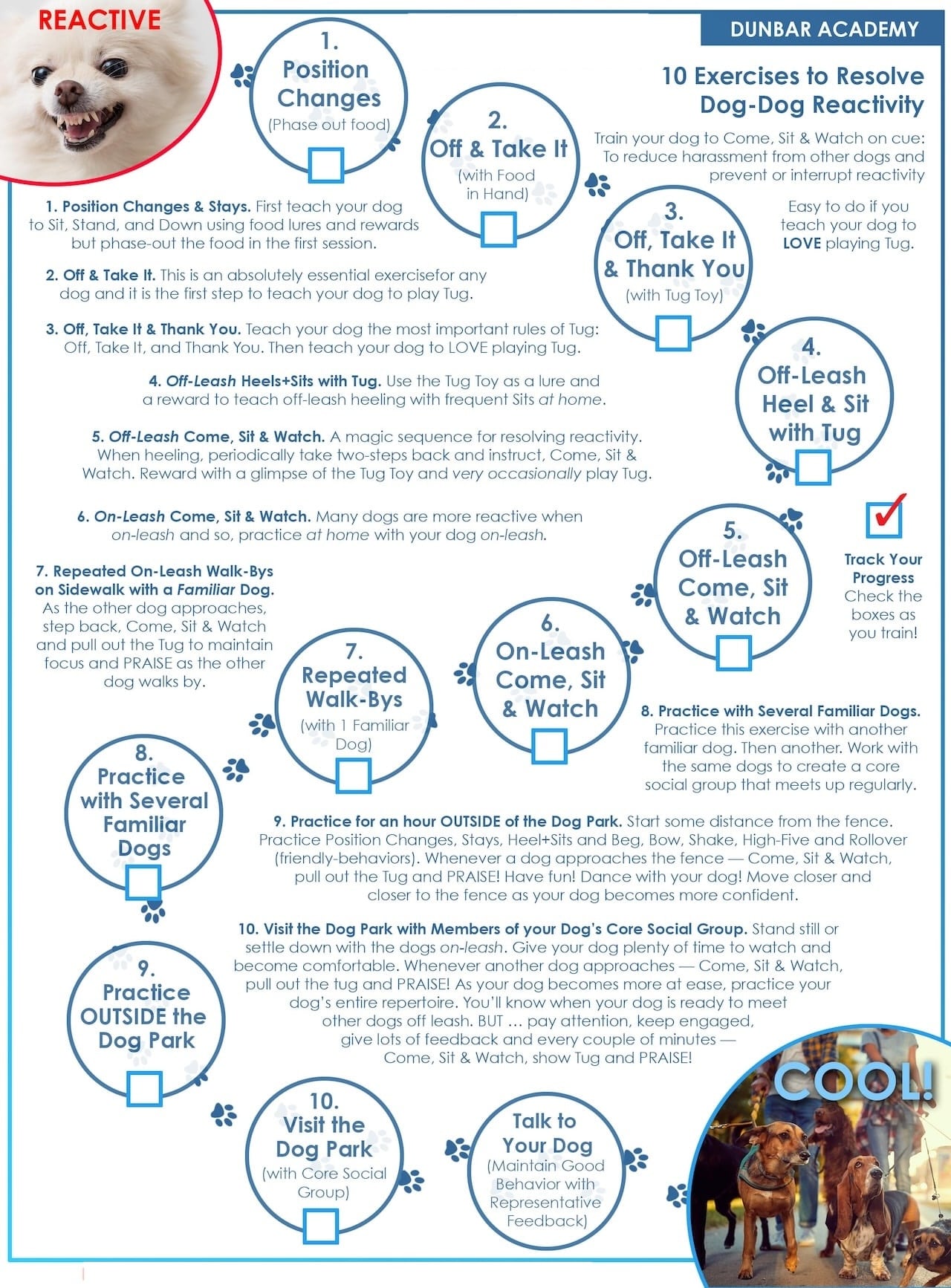
A simple but effective stimulus-blocking technique is teaching your dog to sit and look at you on command. When meeting new dogs or entering potentially stressful situations like a crowded dog park or vet offices – ask for a ‘sit’ and maintain eye contact until calmness prevails. AKC’s guide provides helpful tips for mastering this technique.
This not only helps prevent reactive behavior but also reinforces obedience training – making sure that they follow commands even under stress. Remember, patience is key here as it might take time before results become evident.
Crafting A Bigger Mission For Your Pet
Moving beyond basic commands gives your pet a bigger mission: becoming comfortable around other animals without reacting adversely. ASPCA explains how this could be achieved through consistent positive reinforcement during exposure sessions where good behavior is rewarded generously while any negative reactions are promptly corrected using verbal cues.
Reward-based training builds trust between pets and their owners. This trust fosters a positive environment where your dog feels secure, lessening the likelihood of reactive behavior.
Rewarding Good Behavior Around Other Dogs
As a pup guardian, it’s key to observe and reward your dog when they display good conduct around other dogs. It’s one way to help fix reactive behavior. By acknowledging the times when they are calm and respectful, we reinforce those positive actions.
The Impact of Verbal Praise
Praising your dog verbally is an effective tool in curbing reactivity. When you consistently tell them “good job” during peaceful encounters with other dogs, they begin to understand that this is how they should behave all the time.
Your voice tone matters here as well – dogs can pick up on our emotions through our voices. So keep your praise upbeat and encouraging.
The Majority Rule in Dog Behavior
You might not realize it, but most of the day your pup behaves just fine. Often owners focus too much on correcting bad behaviors that these numerous moments of ‘good’ get overlooked. The American Kennel Club suggests focusing more on praising than scolding helps balance perception.
 Click to Tweet
Conclusion
Getting a handle on dog to dog reactivity doesn’t have to be an uphill battle. With understanding, patience, and the right techniques, you can turn these reactive moments into peaceful interactions.
Praise over punishment – that’s your mantra now. Remember how much power lies in verbal praise and your tone of voice when reactive dog training.
The adult dogs? They’re more than just pets; they’re role models for younger pups learning their way around canine social circles. And don’t forget about stimulus-blocking techniques – use them wisely!
Your reactive pup deserves acknowledgment for good behavior too! The majority rule applies here – reward their well-behaved moments most of the time.
In this journey towards calm canine interaction, let’s not lose sight of what makes our dogs wonderful companions despite those occasional tantrums: Their loyalty, joyfulness and unending love!